Check 21 is has been effective since 2005.tion process.
While Check 21 will significantly speed up the handling
and collection of checks,
the potential for check fraud
losses is nearly certain as the conversion process
destroys
the evidence of fraud in most cases.
What does Check 21 mean for you
& us?
Ongoing updating of effective security features.
Utilize Check 21, checks must meet ANSI standards.
The key for check providers is
the continued use of check fraud prevention.
Industry experts are recommending from a defensive position,
companies and individuals
should be encouraged to use
high security checks with eight or more security features.
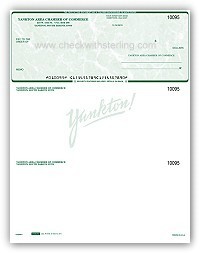
Sterling Business Services, Inc. offers a minimum of 12 free
security features on every
laser and continuous format
business checks.
Check 21 does not provide guidelines or requirements
for the printing or creation of the
original check. However,
documents must be “image friendly” in order
for the banks to
comply with Check 21. Requirements
for image compliant documents are outlined in
ANSI X9.7,
X 9.90.
All of Sterling's business checks have been code compliant
since 2001. Sterling, being
proactive, realized
the need to be image compliant and reviewed the latest
ANSI
specifications 3 years ago. We utilize the
RDM Image Qualifier IQ-X97 to check for
strict
image compliance.